
Eight Day Rain is completely off grid, meaning that we are not plugged into municipal electricity, water or sewage systems. But this wasn’t only a cost decision. We decided to go with alternative systems because they are more sustainable and meet our priorities – putting back into the land as much as we take out of it.
Our toilets use a dry bucket setup inside well-ventilated timber cubicles – clean, simple, and water-free. After each visit, a generous scoop of sawdust covers waste and paper, preventing odour and starting the composting process. Buckets are lidded and swapped when full, then emptied into managed bays and later moved into a hot compost heap. Time, heat and microbes break things down over time until the compost is safe and ready to go back into the landscape.
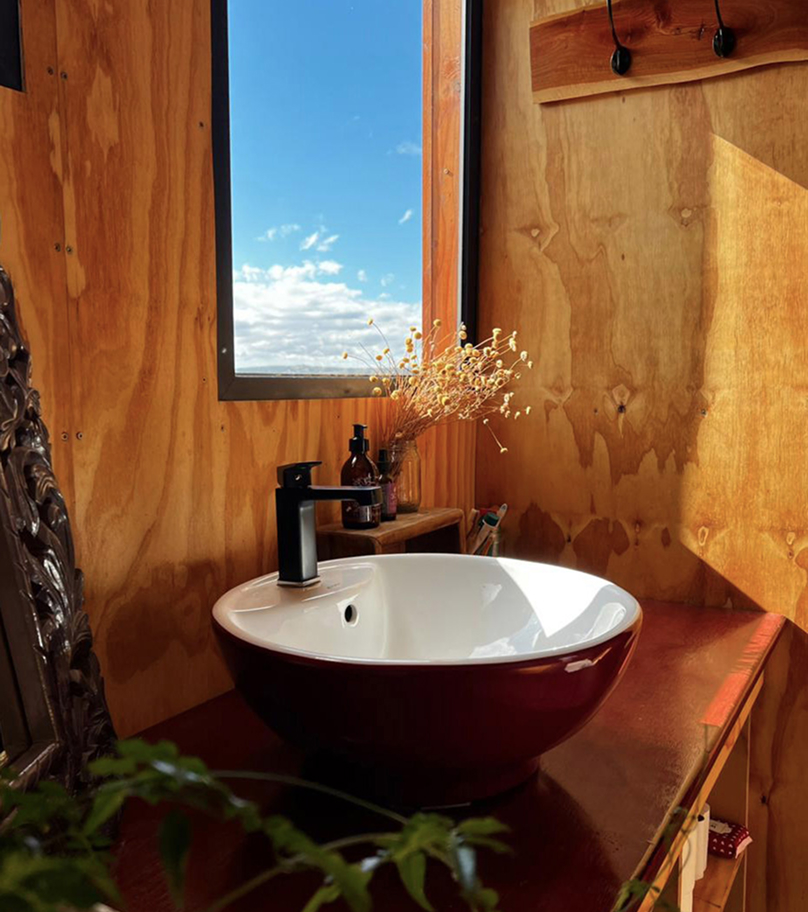
LEARN MOREOur showers and sinks drain into beds of soil, mulch, plants and microbes. In these zones, bacteria and fungi break down soaps and oils into plant food while root systems filter and absorb the waste water. We avoid channels or run-off; water is slowed, sunk and used in situ. Whilst the system is robust we still encourage biodegradable soaps so the process can cycle faster. The result is simple: every litre leaves the earth, enters a thriving micro-ecosystem, and returns to the landscape to promote growth.

Even our food scraps are returned to the earth as compost. First we put all our food scraps into a bokashi bucket and cover them with our mix of sawdust and a small amount of mature compost. This removes smells and starts the composting process. Then the buckets are transferred into a living compost pile that runs on a yearly cycle. Over time we mix in amendments and biochar. The amendments balance the micro/macro profile of our sandy soils, and the biochar creates a home for microbes. This locks both nutrients and carbon in place, keeping it out of the atmosphere.
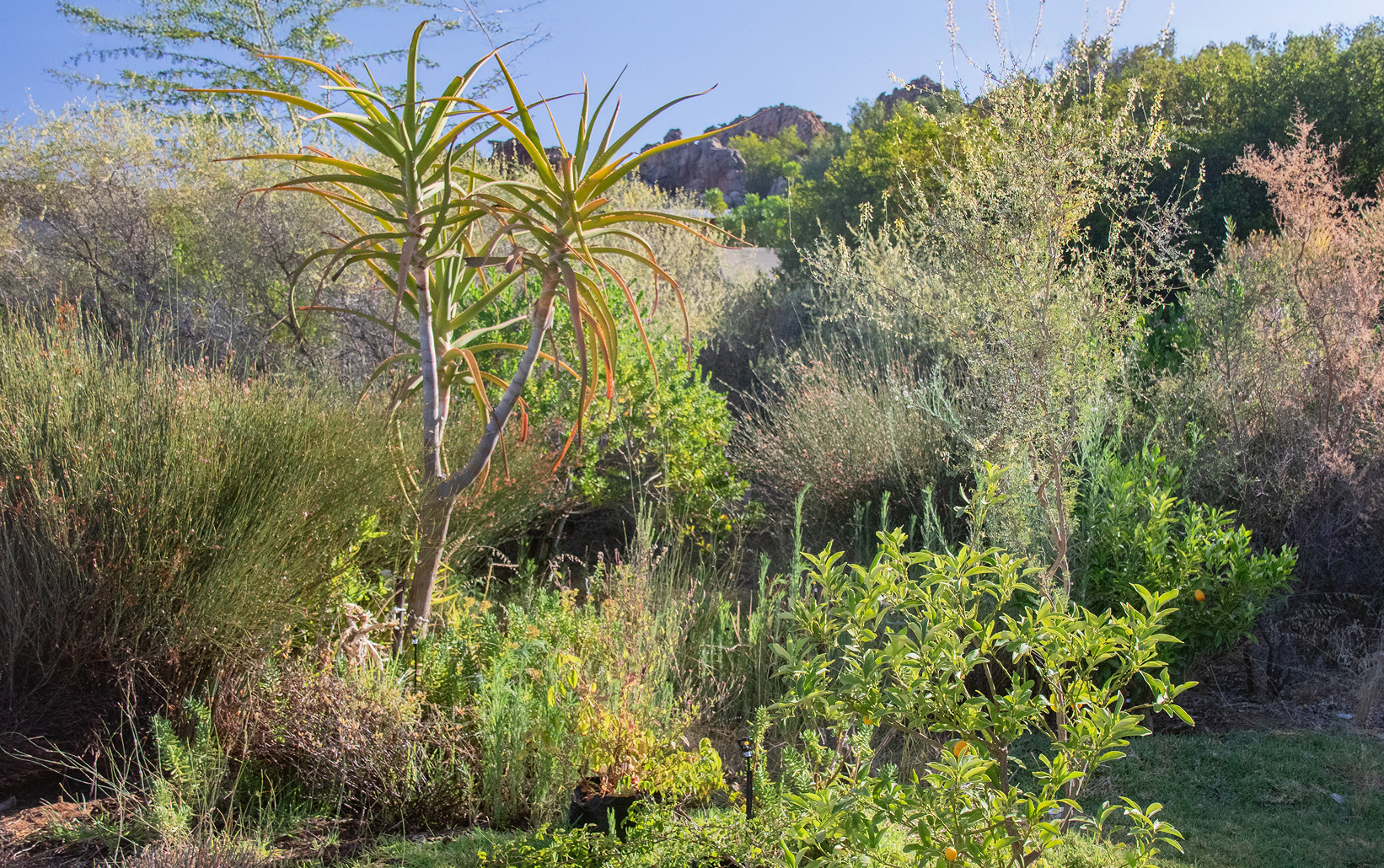
We are big on trees, and so far we have planted over a hundred including a dozen endangered Clanwilliam Cedars. Trees don’t only structure and shape the landscape by reserving space for nature, creating windbreaks, and offering shade. They also help capture water and support much of the local fauna and other flora. Tree planting is so important to us that tree planting parties are among the biggest events on our calendar. If you love trees as much as we do, let us know, and we will invite you to the next one. Alternatively, you can also lend your support by donating a bag of compost.
Almost all non-organic waste is recycled. Every kitchen has four separate bins for plastic, paper, metal and glass. All recycled material is stored on site for up to four weeks before being taken to a recycling centre in Vredendal, and we ask that guests rinse and dry food packaging (including bottles and jars) before depositing it into the appropriate bin. Besides recycling, we also use previously used material in the construction of camp structures and repurpose old gear like boulder pads – turning them into sofas and dog beds.
We are completely off-grid and have to produce our own electricity. We do this almost entirely with a solar farm and only resort to using a generator when long periods of overcast weather prevent our batteries from recharging. To help ensure that stored power lasts as long as we need it to, we ask guests to be mindful of power consumption. Power-intensive appliances like our washing machine are only run during the day.